With “Too Much in Love!” This song goes out to all my fellow Bostonians and everyone else out there that have been literally buried in(to) the snow. Long Live the King Khan & BBQ Show!
All posts by Chris DeCarlo
Charles Manson: An American Superstar

Charles Manson: An American Superstar
He is a beloved recording artist, his image has been plastered everywhere from tee shirts to tattoos, and he has legions of devoted fans. No, not Bob Dylan, this 60s icon spent his entire youth in and out of prison. His name is Charles Manson, a name practically synonymous with mass murder. Manson and his followers, known as “The Family” were convicted of the Tate-LaBianca murders in 1971. In spite of or because of this, he has been given celebrity status as if he was a movie star or baseball player. His infamy is eerily commonplace in various areas of our pop culture. One can turn on the TV and catch his character portrayed in such comedy shows as “South Park” or “Family Guy.” In fact, it was through an episode of “South Park” where I attribute my earliest memory of Manson. I remember watching a SP Christmas special as a child in which Manson appeared as a character with redeeming qualities. Even though it was satire, at the tender age of nine my brain was already invited into the world of one of America’s most feared individuals. Ever since then, his name kept coming up over and over again; I knew he was associated with murder, but even at a young age, I thought of him as another famous name from my parents’ time period. Most people seem to be intrigued by the man and in the American media, Charles Manson has been glamorized to the degree of a superstar. For the television viewing public he has become an object of personal entertainment; just another fascinating celebrity in the league of Michael Jackson and O.J. Simpson.
To begin to understand how or why this character of Charles Manson is so fascinating to the media and the American public as whole, we must start with a look at his childhood. Charles Manson was born on November 12, 1934 in Cincinnati, Ohio. His mother was a sixteen year old prostitute that spent some time in prison when he was a child and he never really knew his father. Unlike most Americans, Manson did not live in a comfortable house on a safe street with at least one, if not two loving parents/guardians and all the other things we associate with typical upbringings. Manson by his own claims and he would claim this over and over again, lived on the streets. He did not know the world of the average American. At an early age it was reinforced that he was different from the rest of America. He was essentially abandoned by the very people whom should have loved him and spent the rest of his childhood years from this boarding school to that boarding school, often running away multiple times from each of them. One time, he tried to be with his mother, but she rejected him. Manson, felt unwanted and unloved and learned to never trust anyone for the rest of his life. With such a troubled past behind him it does not take Sigmund Freud to figure out that Manson would soon find himself deeply invested in petty crime. This included breaking into grocery stores all the way up to armed robbery at the young age of thirteen. He was in and out of juvenile hall centers. According to Manson, he was constantly raped and beaten at said centers and in fact he would run away upwards to eighteen times. His crimes continued into adulthood, basically making prison his new home. In 1967, he was finally released from prison, ironically against his own will; by this time he had spent seventeen years (more than half of his life) in prison.
When Manson left the penitentiary a new world awaited him. A generation had come of age and the Summer of Love was kicking. The 1960s counterculture, particularly in San Francisco, had taken over the nation, so to speak. Long hair, antiwar protests, and psychedelic drugs became ubiquitous seemingly overnight. Young people disdained their parents’ traditions and trashed anything representing the establishment. These kids related to the rebellion of Rock and Roll bands like The Rolling Stones and The Doors and admired the outlaw image of figures like Bonnie and Clyde and Che Guevara. They dug leaders that stood for a new kind of America, one that buried all the traditional values of the America they were raised in and felt abandoned by. Enter Charles Manson, who himself stated, “When I got out all your children would come to me because nobody else had told them the truth.” Of course this was far from the truth as certainly all children did not go to Manson for enlightenment. Naturally, most kids, no matter how drugged up and doped out they were, had enough sense not to join Manson and become part of his “Family.” But, just a few were enough. The man recruited several young, impressionable people, mostly women and was able to brainwash them (often with the assistance of LSD) into thinking he was Jesus Christ or a similar Godlike figure. These women essentially became Manson and would do anything he instructed them to. Even at this juncture in his acting career, Manson dazzled his audience with his intense and fascinating philosophies on life. He had so much control over them that he was able to mastermind his minions into committing the horrible massacre of the Tate-LaBianca murders in August of 1969. Though, Manson was not present, his underlings followed his orders to murder actress Sharon Tate and several others at her home in Death Valley. In prosecutor, Vincent Bugliosi’s book, Helter Skelter he describes the terrifying scene of the crime, “Sharon Tate Polanski-murder victim. Eight months pregnant, she pleaded for the life of her child. “Look, bitch, I have no mercy for you,” one of her killers replied… Only on getting closer did the officers see the bizarre message the killers had left. Printed on the door, in Sharon Tate’s own blood, were the letters PIG” (142). The next night they committed similar murders at the home of Leno and Rosemary LaBianca. Subsequently, the police made the connection between both massacres and the killers and their ringleader were brought to trial. Finally, the whole world got to see Charlie and his angels perform and they loved the attention. This was the beginning of the Charlie Manson Variety Hour, a program the media has eaten up ever since.
During and after the trial (he and his Family were all convicted of murder), Manson’s image became one of the most recognizable in the world. Most famously, his face graced the cover of Life magazine (though he also made the cover of Rolling Stone, amongst others) and this has since become the most famous photo of Manson to date. The mainstream media loved Manson, but obviously portrayed him (rightfully so) as a monster. Of course, if they had made Manson a christ figure they would have lost most viewers, but just by giving him so much attention, he was given all the glamour he needed. The underground press or much of it anyway had no issue with portraying Manson as not only a victim, but another hero of the Revolution, another freedom fighter. At the time, the Vietnam War was boiling and people were taking sides. On one hand was the establishment (Western Civilization) and on the other was anti-establishment, which it turns out in many cases could very well be solely those that opposed the establishment. Thus, Manson became an icon of sorts for the counterculture. Fellow outlaw, Jerry Rubin wrote of visiting Manson in prison following the trial. Rubin, however was not a murderer, but rather one of the leading social activists of the era with a radical sensibility. In his 1971 book, We Are Everywhere, he wrote, “I fell in love with Charlie Manson the first time I saw his cherub face and sparkling eyes on national TV…Manson’s soul is easy to touch because it lays quite bare on the surface. He said he was innocent of the Tate murders and was being persecuted by the pigs because of his lifestyle… Is Charlie innocent or guilty? What is innocence and what is guilt? Can Amerika, after all it has done to Charlie Manson, now put him on trail?” (239-240). Rubin’s sympathy and endorsement of Manson was not uncommon during this era, particularly amongst other subversive and/or underground figures. In fact, in some interviews/speeches, Rubin and others radicals almost sounded like Manson: militant and dogmatic in their attitude and always condemning the American society that turned them into who they were. Of course, the former spoke of liberation, while the latter spoke of domination and annihilation, hardly a freedom fighter,
In the years since his imprisonment, Charles Manson’s stardom has only increased. He has become a massive figure in our American pop culture, he might as well have his star on the Hollywood walk of fame. From books to movies to documentaries, Manson is everywhere. To this day people, particularly young people, follow, worship, or are at least fascinated by Manson. Why? This can be attributed to Manson’s lack of respect for authority. His sense of anti-authoritarianism, at least on the surface, and individuality is attractive to young people, whom are finding themselves as well. Secondly and more significantly, in general the public loves a juicy story, and when it is a celebrity, it is all the more entertaining. The bizarre, the unusual is a big dollar. And the Manson murders were anything but usual and have since become one of the most famous murder cases in history. After his imprisonment, he received numerous interviews on national TV from some of the most famous reporters of all time including Geraldo Rivera, Charlie Rose, Tom Snyder, Diane Sawyer, and others. With the help of the Victims’ Rights Movements, this trend of interviewing serial killers has dyed down over the years. Ultimately this media coverage does very little to nothing for society, except make us crave Manson and other serial killers all the more. When we watch said interviews we do not gain any knowledge or further understanding. Admittedly, they are entertaining, but they mask themselves as something more. But, there is truly no moral purpose to interviewing Charles Manson and giving him the time of day for millions of Americans to tune in to him in their homes. When all is said and done, it is nothing more than cheap entertainment, which is okay, but should be acknowledged as just that. It is no different then any other tabloid, celebrity story. Though Manson is still quite famous, it is for the best that he receives less and less attention, so instead we can focus on real issues rather than fascinating stories to satisfy our taste for the peculiar. In one of his famous prison interviews, Manson was posed the question, “People look at you today, twenty years later and they still have no idea what you’re about. Tell me in a sentence who you are.” After making a series of comical faces, he replies, “nobody.” And there you have it, no one knows Manson as well as Manson himself. For once, I agree with Charlie, he is “nobody,” just another celebrity in a sea of celebrities.
Classic Film Review: Pink Flamingos

Full Title: Pink Flamingos
Director: John Waters
Year: 1972
Comments: Now, I’ve seen my fair share of sick movies, but this “exercise in poor taste” brings disgusting comedies to a whole new level. Waters places his viewers amongst a sea of vile characters, and adimittedly this is style over substance. Drag Queen, Divine fights with her criminally insane counterparts, Connie and Raymond Marble for the title of “the filthiest person alive” and will stop at anything and I mean anything to wear the crown; in the ninety or so minutes of this film, wild, campy, cinematic fringe entertainment (depraved humor and chaos) ensues! Particularly I love the look of the film: trashy, video, stock footage vibes, as if you are viewing The Mansons Family’s home movies. This look has clearly influenced Justin Kelly’s work in the Hunx videos. All in all just a terrific peek into a bizarre, warped world, most of us would never dare to enter. Hilarious, stupid, vomit inducing, but best of all original. I recommend this to anyone that wants to see an offensive, off the wall, no holds barred comedy.
Grade: A-
Who Did It Better? “Have Yourself A Merry Little Christmas”
Well, hello there. I hope all of you are having an amazing Christmas! So, let’s dig into today’s segment of Who Did It Better, shall we? There are so many different versions of this Christmas classic, but here are some notable ones.
Old Blue Eyes sings his heart out.
I really dig the backing vocals.
And here Conor tops Sinatra with this Bright Eyes version.
This song exemplfiies what is great about BE: extremely passionate, somber vocals, practically whispering the words.
And here’s the grandaddy of them all:
Judy Garland- Have Yourself A Merry Little Christmas
This is my favorite Christmas song; it is not a jingle nor a carol and has more emotion than just about any other holiday song one cares to name. Specifically, I adore this version because of Judy Garland’s exceptional vocals, it just makes the music feel all the more sentimental, in a very good way.
But, what do you guys think?
Chris’s Top Songs of Twenty Ten

The Top Song of 2010 for this cat is none other than the Box Elders’ classic “Tiny Sioux” released on Hozac records. Being a massive fan of the Box Elders, I naturally elected this ditty as Song of the Year, but with all that excessive fandom aside, I think this tune has attributes that can be genuinely appreciated by “non-garage” fans: the sincerity of the lyrics and the heartfelt delivery of the vocals. The lo-fi, home recording insanely complements the overall innocence of the number, making it feel like a sad, but beautiful children’s song, as if to be heard before falling asleep. I didn’t think the Omaha boys could top themselves after “Atlantis” from last year’s LP Alice and Friends or at least do it so soon, but indeed they did and this is without a doubt my favorite BE number. Y’all have to hear this!
Okay, so the rest of this list will be in alaphabetical order and I have set it to a three song per artist limit. Here we go…
Sadly no A’s :(

B:
Best Coast:
“When I’m With You”
“Boyfriend”
“Summer Mood”
Box Elders:
“Tiny Sioux” :)
“Plenty of Room At the Bottom”
C:
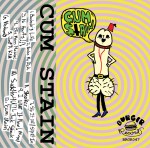
Cum Stain:
“Cum Stain”
“Broke My Dick”
“Bachelor’s Life”

D:
Deerhunter:
“Basement Scene”
“Don’t Cry”
“Desire Lines”

H:
Happy Birthday:
“Girls FM”
Harlem:
“Friendly Ghost”
“Someday Soon”
“Gay Human Bones”
Hunx and His Punx:
“Cruisin'”
“Gimmie Gimmie Back Your Love”
“Hey Rocky”
Note: these songs had been released previously, but this year marked their official release (Gay Singles) on True Panther Sounds. So, I’m breaking my rule here by sharing two more rockin’ Hunx tunes.
“Lovers’ Lane”
“Too Young to Be In Love”

M:
Magic Kids:
“Hey Boy”
“Candy”
“Summer”
Maine Coons:
“Pull the Plug On Grandma”
“I Am a Motherfucker”
“My Kinda Luv”
Mark Sultan:
“Ten of Hearts”
“Misery’s Upon Us”
“I Am the End”

N:
No Age:
“Life Prowler”
“Glitter”
“Fever Dreaming”
Nobunny:
“I Was On (the Bozo Show)”
“Live It Up”
“(Do the) Fuck Yourself”

S:
Sex Beet:
“I’m In Love With You (So Shut the Fuck Up)”
Strange Boys:
“A Walk On the Beach”
“Be Brave”
“Laugh At Sex (Not At Her)”

T:
Ty Segall: need to hear more of this guy!
“Caesar”

V:
Vomit Squad:
“Burning With Beelzebub”

W:
Wavves:
“Post Acid”
“Linus Spacehead”
“Take On the World”
Remember This Show?!
Yo MTV Raps! back in the good ol’ days of mainstream hip hop. Speaking of which here is Ol’ Dirty Bastard being his usual, off the wall, crazy ass self. RIP brother.
The Spirit of Christmas
Here’s the original from 1992. This is the earliest incarnation of South Park in which Jesus anilhilates an Evil Frosty! The Kenny killed looks just like Cartman haha.
and here’s the second version made a few years later. In this one the characters appear (in terms of animation and character) as they would in the future series, it just looks crappier. Instead of Frosty, we witness Jesus v. Santa! Who will win this epic showdown for the bragging rights of Father Christmas?
RIP John Lennon :(
The one and only…
Song of the Day: Jacuzzi Boys- Smells Dead
“Smells Dead,” the Song of the Day from our Band of the Week- the great rockers, Jacuzzi Boys!
New Those Darlins LP Out In March 2011!

The album is entitled “Screws Get Loose” and is to be released on March 29, 2011. Can’t wait to hear it!
 Kids Like You & Me (KLYAM)